(from the original liner notes by Flip Mancuso)
Clay Thompson has been a familiar presence on bandstands for many years. His tone carries the lift of Kansas City nights, the rough charm of St. Louis rooms, and the grounded weight he gathered during long stretches in Chicago. Much of his career has been spent in the service of other bandleaders, shaping their ideas with his warm sound and easy authority. On this date, with a quartet that understands his musical center, Clay steps forward with unusual clarity.
The music comes entirely from Terry Frank. His name is known among big band players who trade stories about writers willing to push harmony into new corners. It appears as well in conversations among classical musicians who admire the poise and elegance of his chamber works. Frank’s writing here shows the same blend of imagination and control. These eleven originals stand comfortably in the modern climate without losing contact with the roots of swing and melody. The tunes give the quartet a full range of color and motion. Each one creates space for the band to move freely, yet every phrase feels shaped with care.
The album opens with Come Along, a warm and unhurried swing. The tune feels like a friendly invitation, as the group settles immediately into a comfortable groove, with Bobby Lundberg’s opening solo setting the pace. Jamil Abdullah steps forward early on the album with a solo that brings out the relaxed spirit of the piece.
Long Straight Road narrows the focus with a lean, medium up line. A sharp stop time figure clears the air before the melody takes hold. It is catchy, direct, and full of the kind of writing that players enjoy digging into. Dunbar punctuates the breaks with crisp authority, and the quartet locks into a tight forward motion.
Approchant shifts the scene with a bright jolt of samba energy. The rhythmic drive is strong and Clay stretches long melodic arcs across the lively pulse. Abdullah and Dunbar hold the foundation with a quick and steady feel, while Lundberg threads light harmonic colors through the texture.
Floating on a Wind Drift brings the group into a medium swing in five. The meter settles into a gentle sway. Clay phrases with a soft, bending touch, and Lundberg’s lines move with a clear sense of air and space. The rhythm section keeps the tune buoyant without ever pushing too hard.
It Only Happens Sometimes slows the temperature. Frank has written a melody with an unforced romantic shape. Clay treats it with an honest and restrained voice, and Lundberg answers with a quiet lyricism that fits the mood.
The quartet jumps back into hotter territory with Crossing Bridges, a fast tune built on the harmonic ideas moving through New York clubs during this period. Abdullah and Dunbar hold the path steady while Clay delivers some of his most forceful improvising on the record.
The Summer After opens a darker window. It is a slow minor blues that carries a sense of memory and regret. Clay’s tone settles deep into the tune, and Abdullah’s steady pulse keeps the mood centered.
Updream returns to a medium pace but keeps a reflective spirit. It feels like a sideways look at the world of “Laura”, thoughtful and quietly exploratory. Boldly I Go continues the introspective mood. It is a sensuous ballad that unfolds with patience and a searching quality. Lundberg’s solo leans into the tune’s gentle curves while Dunbar supports with subtle restraint.
Frank offers only one waltz on the record, Wanderlust, a medium up three that glides easily under the hands of the quartet. The melody carries a natural lift, and the group plays with unity and lightness.
The title track, Movin’ On, closes the album with relaxed confidence. Dunbar grows more assertive as the tune unfolds, and the final exchange between the drums and the rest of the band brings the date to a spirited finish. It leaves the listener with a sense of forward motion and satisfaction.
Clay Thompson has spent most of his musical life as a supporting voice, lending his sound to many leaders and shaping the character of countless sessions. Here, with Terry Frank’s writing guiding the way, he delivers a performance that shows the full strength of his musicianship. Frank gives him music that is both welcoming and forward leaning. Lundberg, Abdullah, and Dunbar meet the challenge with conviction and swing.
Movin’ On stands as a portrait of a working musician at his most direct. It is jazz with purpose, clarity, and no wasted motion. Prestige listeners will recognize its truth. This is Clay Thompson stepping confidently into the center of the sound, supported by compositions that show why Terry Frank’s name continues to travel through musical circles with growing respect.
Clay Thompson, tenor saxophone
Bobby Lundberg, piano
Jamil Abdullah, bass
Willie Dunbar, drums
All compositions by Terry Frank
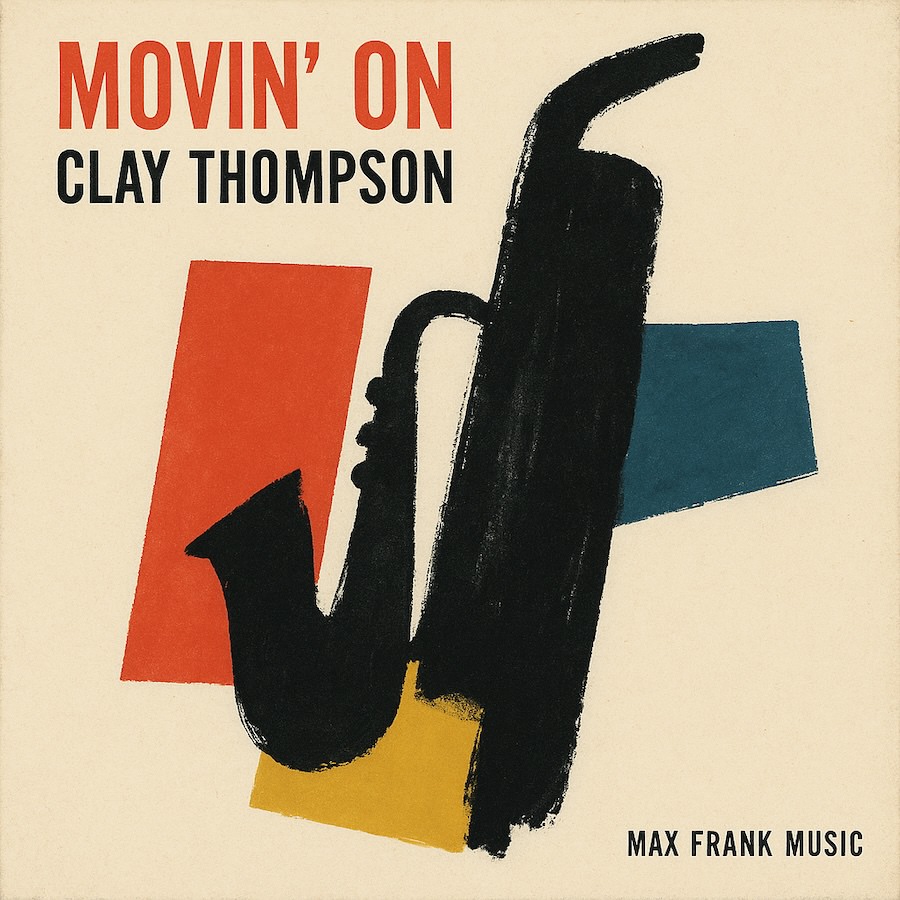
down beat
Movin’ On
Max Frank Music
2½ Stars
Clay Thompson has been part of the working scene for many years, and his tenor sound carries the familiar weight of Kansas City and St. Louis clubs. His tone remains warm and gritty, with the lower register speaking in the direct manner that marked his early days. On his first album as a leader he steps forward with a quartet that serves him faithfully, though the results are mixed.
The program consists of eleven originals by Terry Frank. His writing offers clean structure, clear melody, and a blend of modern harmony with traditional swing feeling. The pieces are well shaped and give the group room to move, although the contrast between Frank’s careful design and Thompson’s relaxed phrasing occasionally places the leader at cross purposes with the material.
Come Along sets an easy opening mood, with Bobby Lundberg offering a shaped solo that stands out among the early tracks. Long Straight Road has bite, although Thompson does not always press into the sharper edges of the line. Approchant brings welcome motion and gives Thompson a chance to stretch long phrases over Abdullah and Dunbar’s firm rhythmic base.
Floating on a Wind Drift finds the quartet in a gentle five. Thompson relaxes, and the band supports him with a light sway. The ballad It Only Happens Sometimes shows sincerity, but the emotional range feels narrower than the tune invites. The faster material, particularly Crossing Bridges, brings out a stronger sense of drive, and Thompson answers with short bursts of energy that hint at a more forceful direction.
The blues selections, especially The Summer After, are steady and centered, though the mood turns inward and the performance never quite rises above its own shadow. The reflective pieces in the second half drift without full commitment, even if the playing remains competent. Wanderlust lifts the album again with an easy waltz feel before the title track closes the session on a confident note.
The rhythm section provides some of the brightest moments on the record. Lundberg plays with clarity, Abdullah stays grounded, and Dunbar’s work is consistently sharp. Thompson’s playing is appealing in tone and feeling, but the album does not reveal a strong or urgent personal statement. It is honest, functional jazz, marked by occasional sparks but limited in range. "Movin’ On" will interest listeners who follow Thompson’s work with larger ensembles and those who appreciate a traditional tenor voice set against modern writing. The music carries moments of charm, though the overall impression is modest.
J.T.
Copyright © 2026. All rights reserved.