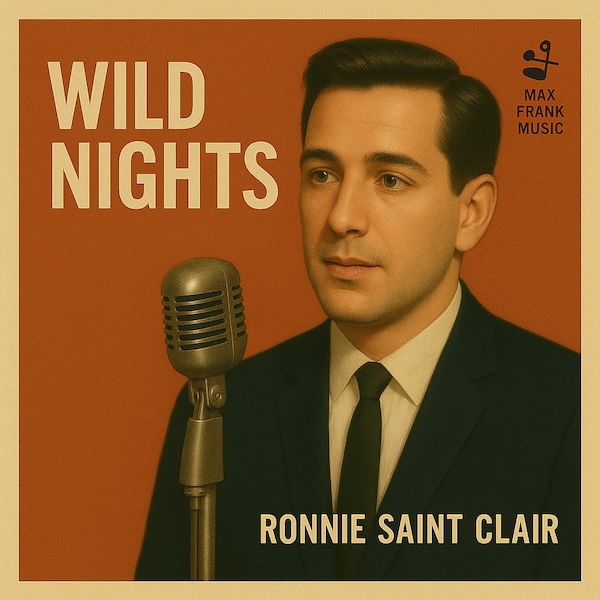
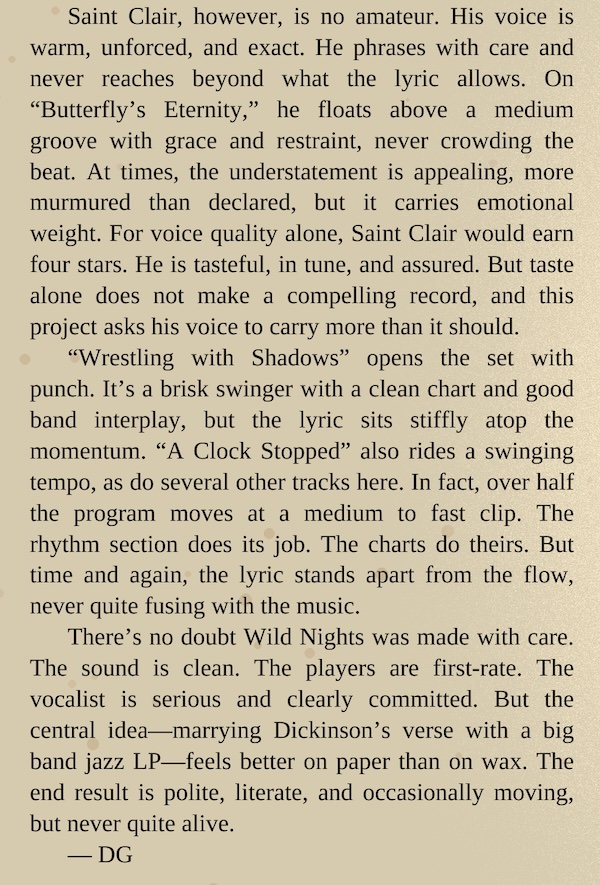
When Wild Nights appeared in 1957, it did not fit neatly into any existing category. It was neither a conventional vocal jazz record nor a novelty experiment. Built around Emily Dickinson’s poetry and presented as a continuous sequence, the album asked listeners to engage with language, pacing, and emotional restraint in a way that was unusual for its time. The emphasis was not virtuosity or spectacle, but tone, clarity, and atmosphere. Even on first release, it was clear that the record was operating on different terms.
The album’s immediate influence was subtle rather than loud. It did not generate a wave of imitators, but it quietly circulated among singers, arrangers, and producers who were attentive to form and concept. Its approach to text setting, particularly the refusal to sentimentalize the poetry, anticipated later projects that treated the album as a unified statement rather than a collection of singles. Over time, Wild Nights came to be cited less as a commercial touchstone and more as a reference point, a record people returned to when thinking about how voice, language, and orchestration could coexist without competing.
For decades, the album’s reputation rested largely on memory, scattered airplay, and secondhand accounts. Original pressings were scarce, and the record was discussed more often than it was heard. That changed with its release on CD, which brought Wild Nights back into circulation in a form that allowed close listening and reassessment. Heard again in full, the album revealed a coherence and discipline that had been easy to miss when access was limited. New listeners encountered it not as a historical curiosity, but as a complete artistic statement.
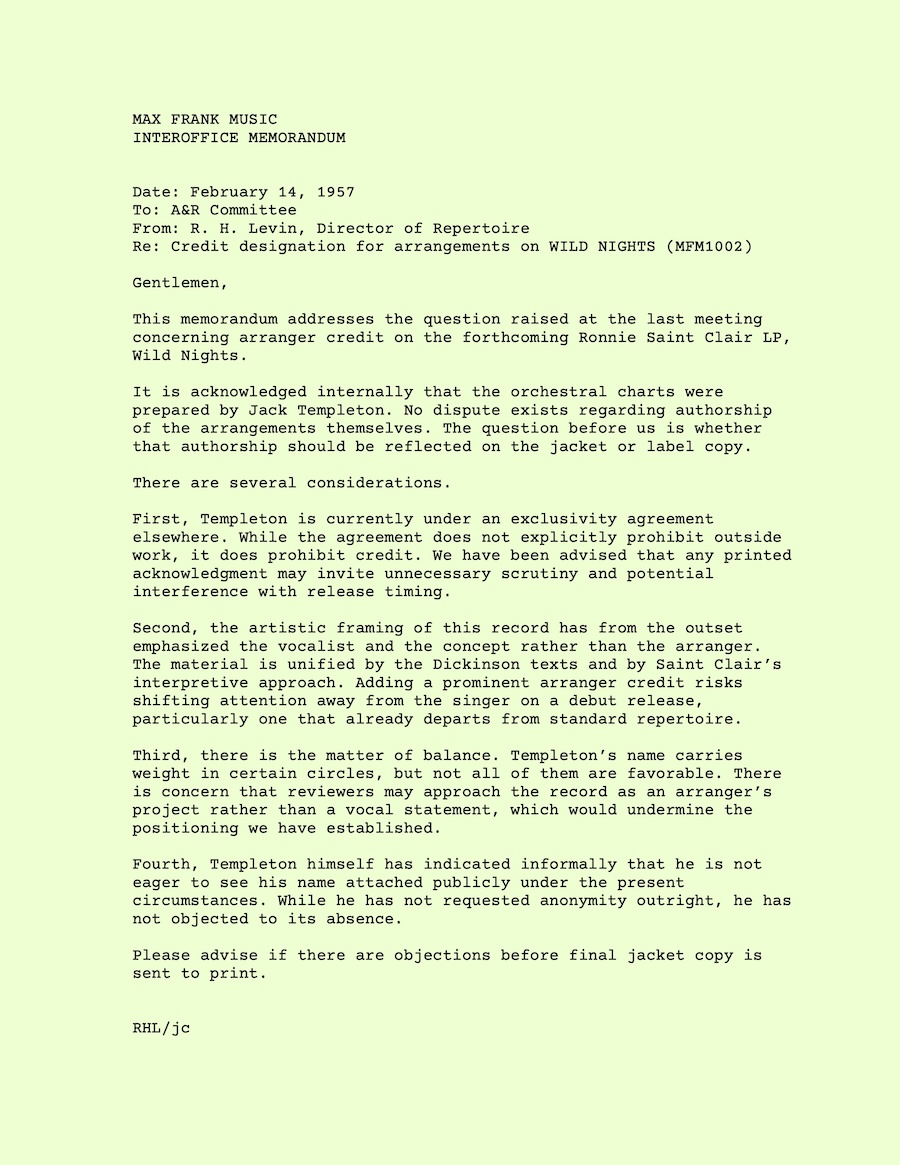
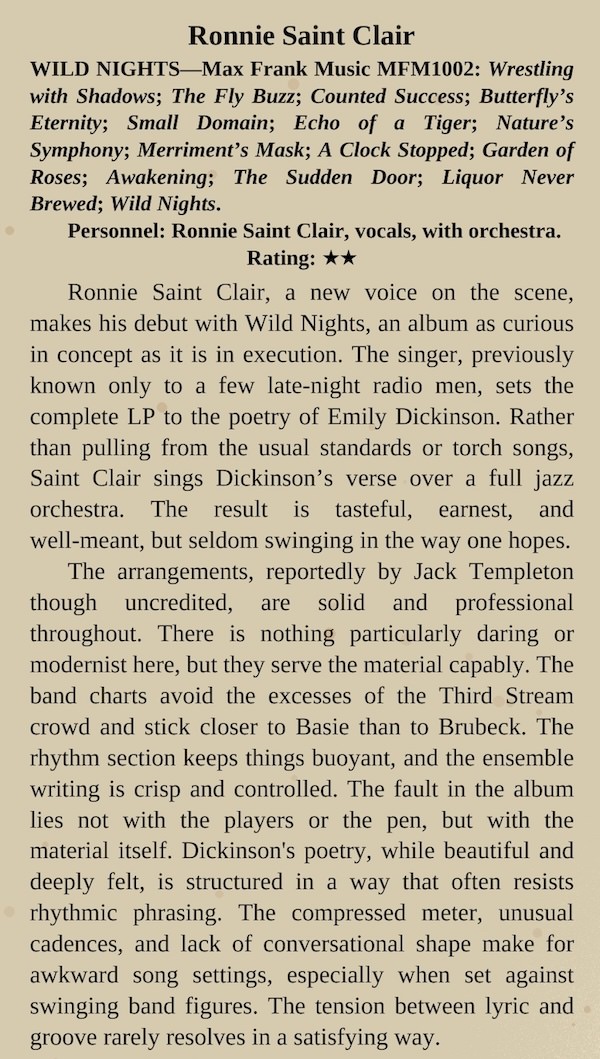
This page is dedicated to Wild Nights as an album, not as a footnote. Here you will find the music itself, contemporary responses, and archival materials that illuminate how the record was made, received, and later rediscovered. Together, they show why Wild Nights continues to resonate, not because it belonged to its moment, but because it stood slightly apart from it.
Copyright © 2026. All rights reserved.